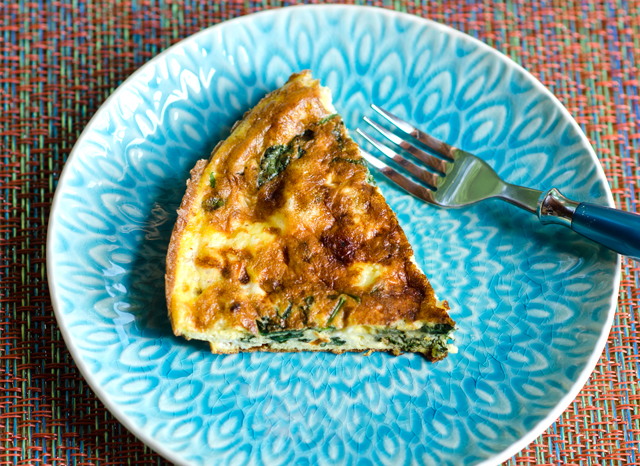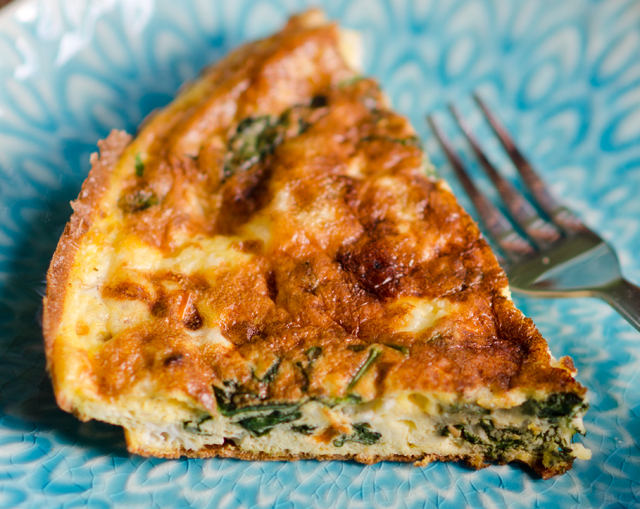
July 23, 2015 Zucchini Pesto Frittata

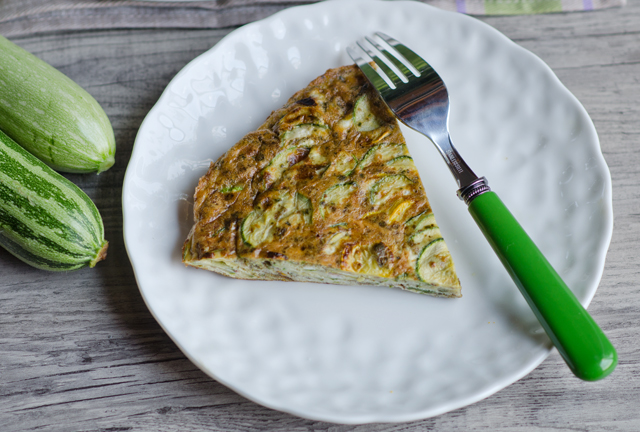
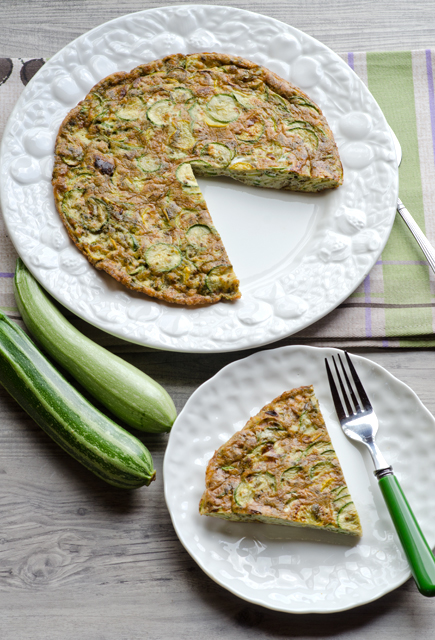
DSC_3760aIf you’re like me and not always in the mood to cook something when you get up in the morning for breakfast, but still want a little something to eat, a frittata is a great choice. Made the day before, they warm up quickly and also taste good at room temperature.  But frittatas aren’t just for breakfast, they make a nice lunch, light supper, sliced thin as an hors d’oeurve or anytime you just want a little nibble. This time of year they are a great way to showcase farm fresh eggs and produce.

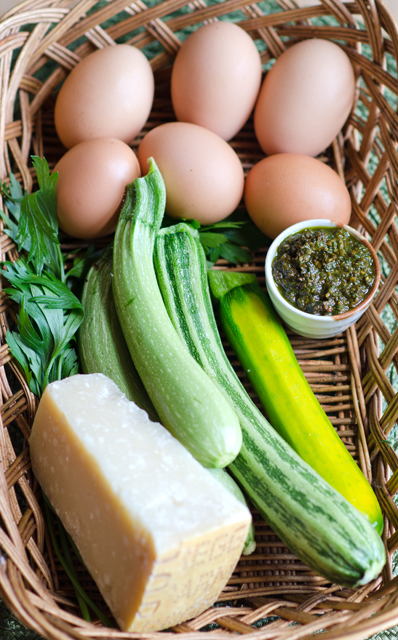
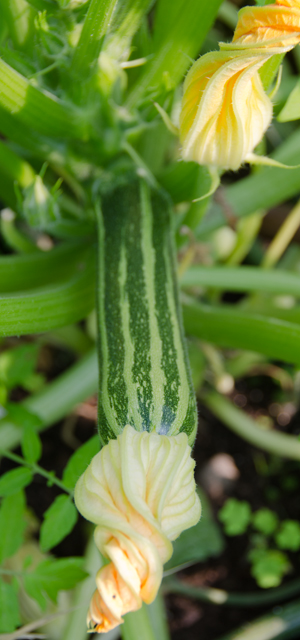
For this recipe I chose the smallest zucchini I could find in the garden. Since their seed pods are still underdeveloped, they have a sweet nutty quality to them. I wanted very thin slices rather than shreds which is the usual method of preparation. Slice by hand, or for real uniformity, I used the 2mm slicing disk on the food processor. Larger zucchini should be shredded and salted then squeezed dry before adding to the frittata. If you skip that step, when you cook the zucchini you essentially will be steaming, not sauteing it. A couple of tablespoons of a chopped fresh herb is a welcome addition to a frittata, but since I had just made some, I opted for pesto, a delcious addition to this dish.

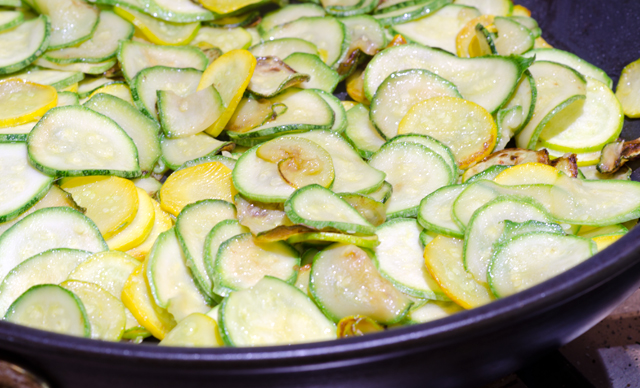
A 10″ non stick skillet with an oven safe handle is essential for this recipe. Begin by cooking the zucchini until it releases some liquid and the slices start to brown and become tender, this should take about 5-6 minutes. Set the pan aside.

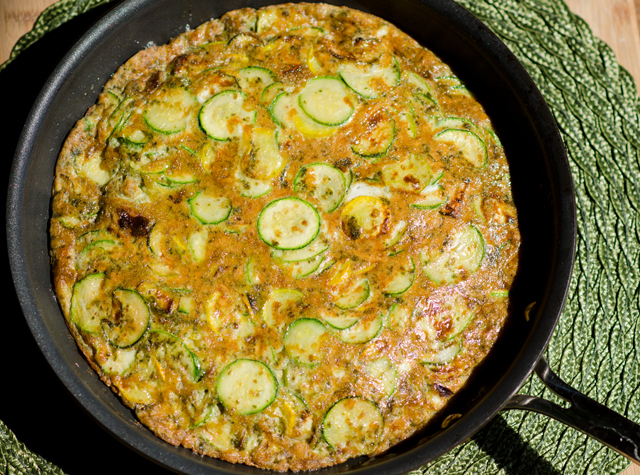
Preheat your oven’s broiler and place a rack in the upper middle position. Beat the eggs and Parmesan cheese in a medium bowl.  Stir in pesto and the cooked zucchini. Add the rest of the oil to the empty skillet and heat to medium. Add zucchini-egg mixture and cook for 4-5 minutes, frittata will look set around the edges. Move the skillet to the broiler and leave a potholder on the oven door, that handle will get hot. I set a timer now for 90 second intervals. It took about 2 intervals for the frittata to get brown, which translates to about 4 minutes.

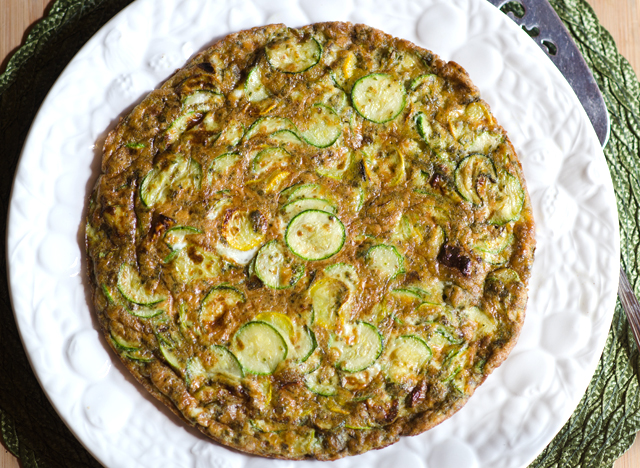
Using the potholder, remove frittata from the oven and allow to rest for 5 minutes.Run spatula around the edge of the skillet to loosen the frittata. You can serve the frittata warm right from the skillet, or slide unto a platter for a prettier presentation.
DSC_3460a

Zucchini Pesto Frittata

Serves 4

Ingredients

  • 2T olive oil
  • 1 1/3 lbs. of very small zucchini, washed and ends trimmed
  • Kosher salt and freshly ground pepper
  • 1-2T pesto or freezer pesto, thawed with cheese added
  • 6 large eggs
  • 3T grated Parmesan cheese
  • 2t olive oil

DSC_3719a

Directions

  1. Heat broiler.
  2. Slice trimmed zucchini by hand or with the thinnest slicing blade of the food processor.
  3. Heat 2 tablespoons oil in a 10-inch non stick skillet over medium high heat. Add zucchini; cook, stirring occasionally, until zucchini is tender, about 5 minutes. Season with kosher salt and freshly ground pepper.
  4. Beat six large eggs with 3 tablespoons grated Parmesan cheese in medium bowl. Stir in pesto and cooked zucchini into beaten eggs.
  5. Heat additional 2 teaspoons oil in the now empty skillet over medium heat. Add zucchini, pesto and egg mixture; cook until frittata is almost set, 4-5 minutes.
  6. Slide skillet until the broiler and cook until frittata is set and the top is browned.
  7. Serve directly from the skillet or flip unto serving plate. Serve hot or at room temperature.
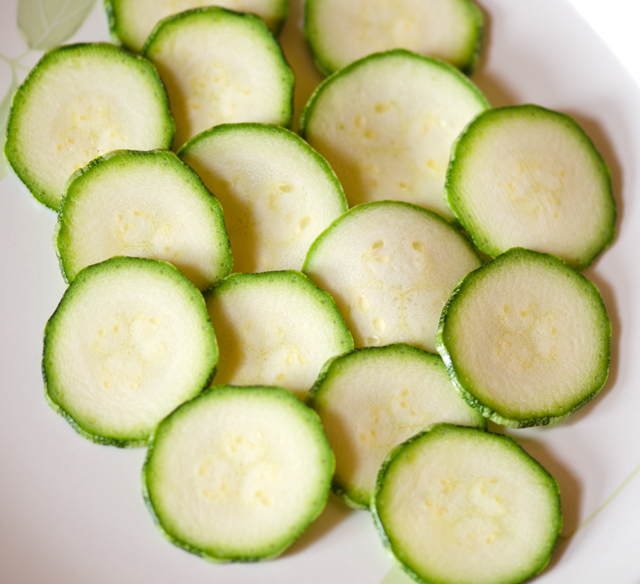
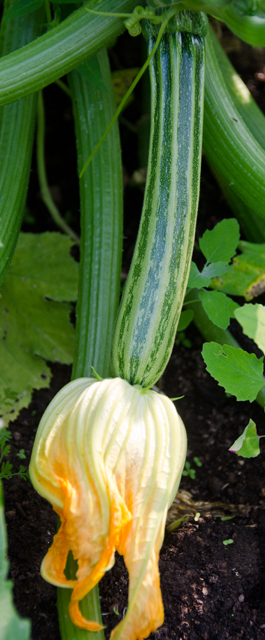
The seed pods are not developed yet in baby zucchini.

DSC_3724a

DSC_3726a

DSC_3731a

DSC_3767a

July 11, 2015 Turkey Zucchini Meatballs in Tomato Sauce with Zucchini Noodles

DSC_3563aThis year, after the holidays I was on the hunt for interesting healthy, flavorful recipes. I found just what I was looking for in turkey zucchini meatballs. The original recipe was for turkey and zucchini burgers from chef, restaurateur, and cookbook author Yotam Ottolenghi’s beautiful book, Jerusalem. Just like all the other recipes I have tried of his, the results were delicious.. It was easy enough to adjust the size of the original slider sized burgers to make into meatballs instead. Grated zucchini gives the typical ground turkey meatball the additional moisture that it needs.  Since zucchini is 95% water, it is very important to squeeze all of the excess moisture out of the shredded zucchini so the mixture holds together well.  The turkey and zucchini are combined with fresh cilantro and mint, along with garlic, cumin and spicy cayenne pepper to give them a little kick.  I served them as suggested with a sauce of Greek yogurt, lemon and sumac. At that time in the middle of a cold snowy January I was bemoaning the fact that I had to buy the zucchini and the herbs and if it were July, well, those ingredients would be from our garden.

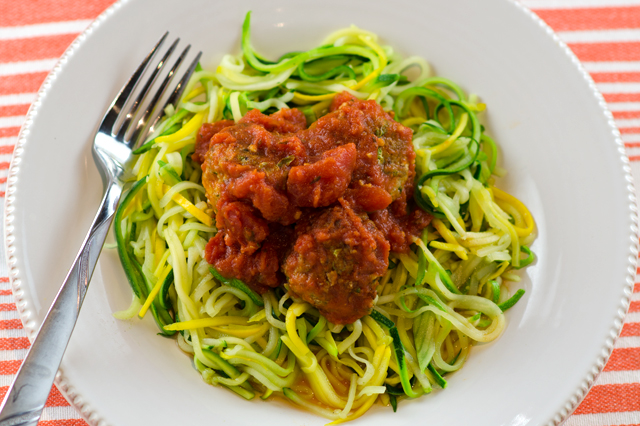
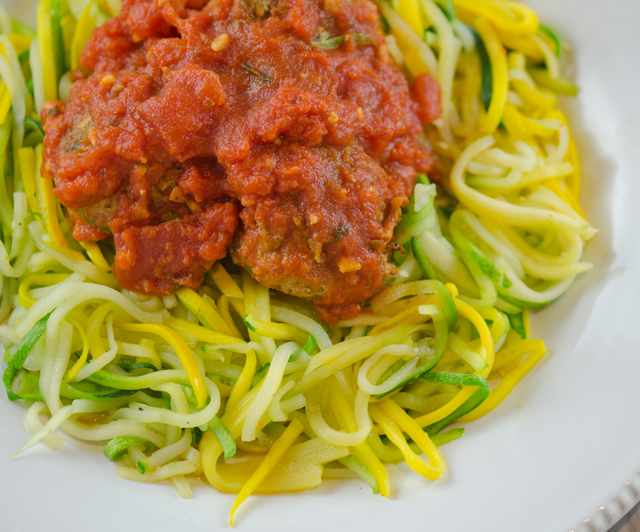
It’s July now and I remembered to make the turkey zucchini meatballs again, this time with our fresh picked zucchini and herbs from the garden. Back in January  I also thought it would be a good summertime variation on the recipe to serve the meatballs with tomato sauce and zucchini “noodles”. Our zucchini vines are producing like mad, I am picking four to six zucchini and yellow squash a day. That doesn’t count the ones that hide under the large leaves and turn into baseball bats!

To make the “pasta” choose straight sided zucchini or yellow squash, preferably of a medium size in diameter, the longer the better. My tool of choice for making the strands is the Kuhn Rikon stainless steel julienne peeler. Steady the zucchini with one hand, start at the top, press the teeth of the peeler into the flesh and pull down. Keep shredding on all sides until you reach the seedy interior. Place the strands in a bowl and separate the strands that stick together with your fingers. I lightly salt my pile of “pasta” to extrude any excess liquid.  I cook the strands in a saute pan, just long enough to warm them up a little and evaporate any additional excess liquid. I still want my zucchini to have a little crunch. If you prefer you can serve the meatballs with the pasta of your choice.

Our tomatoes are just starting to come in now, not quite enough to start making sauce. Until then I will use a good quality store brand. I like to warm the sauce and add the meatballs that I have kept warm after cooking them. Next time I will adjust the herbs in the meatballs for this dish, I think basil and a little oregano would complement the sauce and zucchini noodles nicely.

DSC_3458a

DSC_3465a

DSC_3554a
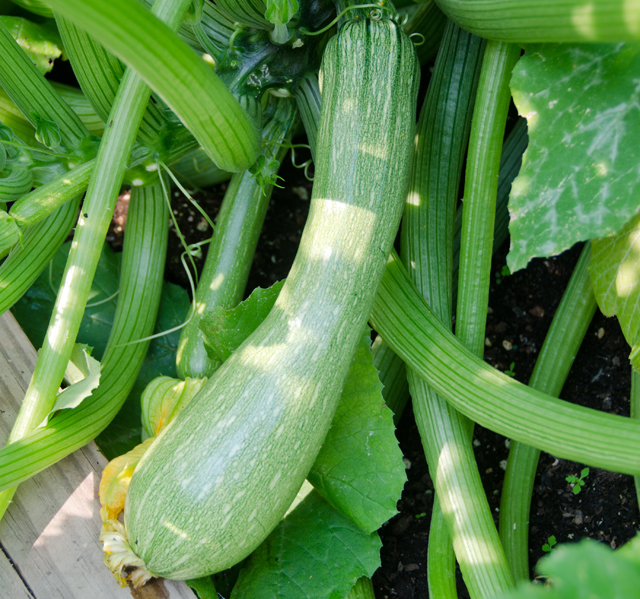
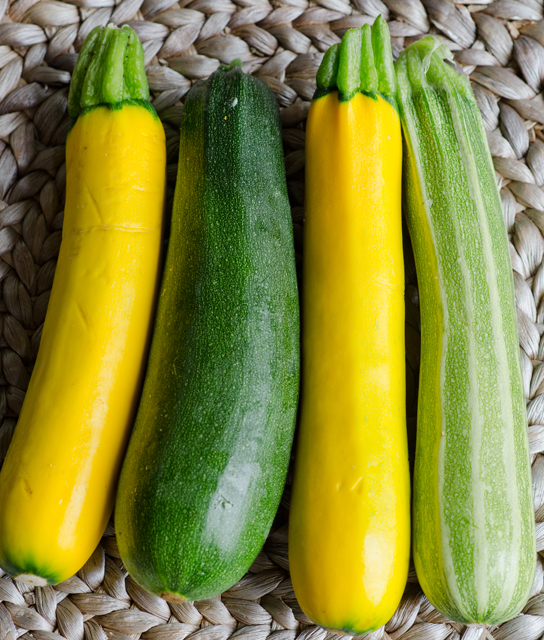
I love the different varieties of zucchini and squash we grow.
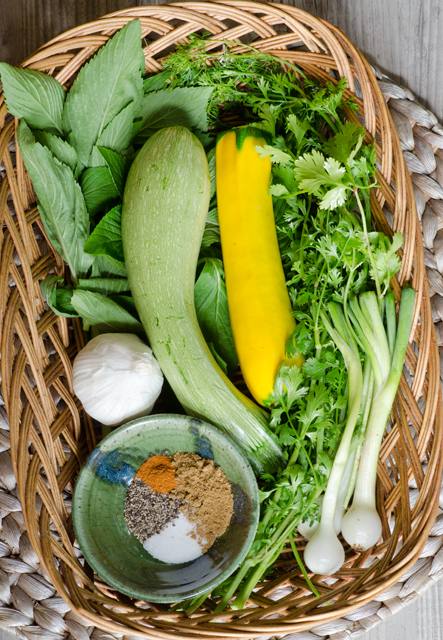
This time I had our own zucchini and herbs for the meatballs. I substituted baby shallots for the green onions.


Turkey and Zucchini Meatballs

Serves 4-6

Makes 18-20 meatballs

Ingredients for Meatballs

  • 1lb ground turkey, I used a 93/7 lean to fat ratio
  • 2c grated zucchini-wrung out in a clean tea towel to remove excess moisture
  • 3 scallions, white and green, thinly sliced
  • 1 large egg
  • 2T chopped mint
  • 2T chopped cilantro
  • 2 cloves garlic, crushed or finely chopped
  • 1t ground cumin
  • 1t table salt
  • 1/2t freshly ground pepper
  • 1/2t cayenne pepper
  • about 1/8c of a neutral cooking oil, canola, safflower
  • 3-4 cups of your favorite tomato sauce, warmed

Directions

  1. Preheat the oven to 425°F. In a large bowl combine all the ingredients for the meatballs, except the cooking oil. Mix well with your hands. Shape into 2″ balls. Place meatballs on a well greased baking sheet to ready for cooking. Pour enough oil into a large heavy frying pan to form a layer about 1/16 inch thick on the bottom of the pan. Heat over medium heat until oil is shimmering, sear the meatballs in batches on all sides. Cook each batch for about 4 minutes adding oil as needed, until browned.
  2. Transfer the seared meatballs to a baking sheet and place in the oven for 5-7 minutes, or until just cooked through. Serve warm with tomato sauce

Ingredients for Zucchini “Noodles”

  • 3-4 large straight sided zucchini and/or yellow squash
  • Kosher salt
I like making shreds with the julienne peeler, you could make them in a food processor with the shredding disk or a spiralizer tool I have seen in supermarkets.

Directions

  1. Wash and trim zucchini and/or squash. Cut stem and root end off. On a cutting board, steady your squash with one hand and shred with a julienne peeler. Start at the top, press the teeth of the peeler into the squash and pull all the way down.
  2. Shred on all sides of the squash until you reach the seeds. Repeat with the rest of the squash. Place the strands in a very large bowl, separate the strands that stick together and salt evenly. Let sit for 10 minutes to extrude any excess water.
  3. Over medium heat cook the strands in a large sauté pan to warm up the squash and remove any excess water.

DSC_3571a


July 7, 2015 Buttermilk Broccoli Basil Soup

DSC_3383a

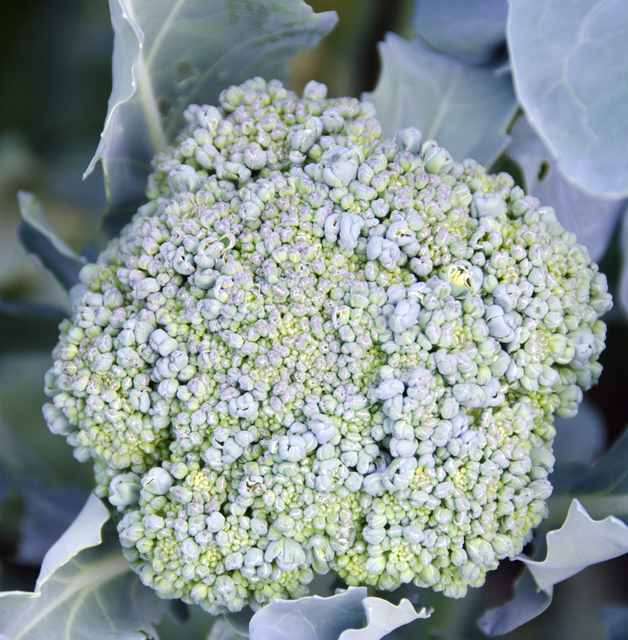
When I first started cooking in the eighties, supermarkets sold broccoli with both the crown and stem, usually two pieces joined together with a thick rubber band. Back then I would whack off the stems and use the florets for stir fries and rich broccoli cheddar soup. The stems were sentenced to the compost heap or the garbage pail. Like most home cooks, I didn’t realize the stems were edible and had no idea how to cook them.

Because of my interest in Chinese cooking I discovered a recipe that changed the way I looked at using broccoli.  It was a recipe for jasmine fried rice that called for peeled and diced broccoli stems.  I admit I was dubious at first, but the delicate texture and sweet flavor the stems brought to the dish won me over. Now the problem became finding broccoli with the stem. Over the course of time the crown and stem combination was replaced with just broccoli crowns, sold at a higher price.  Like me, consumers wanted just the crowns, so the supermarkets responded in kind.  Broccoli crowns became the norm, coming at a premium price per pound.

Fast forward to the last several years, with the advent of farmers markets, food co-ops and the rising popularity of home gardens, the broccoli stem has reappeared. In the spirit of nose to tail cooking, using virtually the entirety of an animal,  chefs are now embracing root to stem cooking, using as much of the vegetable as possible. Why not use broccoli stems? The main stem is entirely edible.  They have the same nutritional value as the crowns or florets with even more fiber.  I have found recipes using the stem for everything from salads to stir fries to roasted chips.

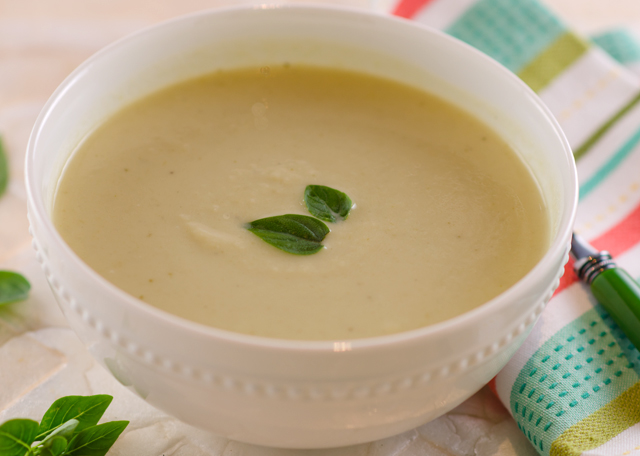
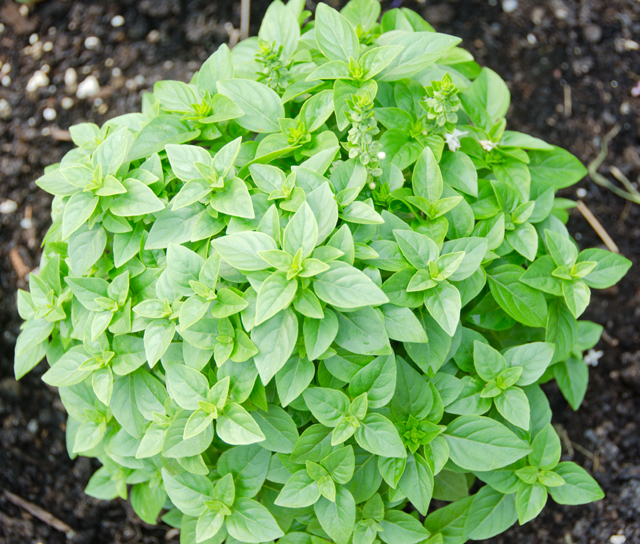
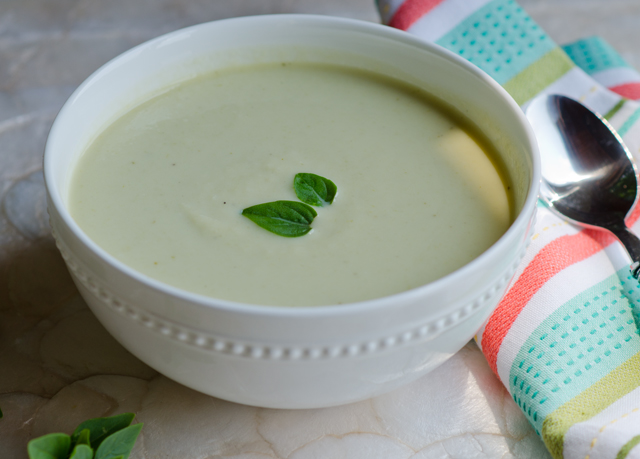
The original recipe for this soup called for broccoli florets only.  I used the florets in another dish and in the spirit of root to stem cooking, thought the stems would work well in a soup. I sliced the stem into bite sized pieces to yield 5 cups. The sliced broccoli stems and shallots are sauteed in butter or oil. A little sherry boosts the flavors and the vegetables are simmered in either chicken or vegetable broth. Since they are more fibrous, broccoli stems should be cooked a little longer than the florets.  You can either peel the stems first or put the mixture through a food mill after pureeing to obtain the smoothest texture.  Thin the soup with buttermilk and garnish with mini basil leaves. Our warm temperatures called for a cold soup but this would be good warm as well.

I used five cups of bite sized broccoli stem pieces.

DSC_3407a

Broccoli Basil Soup

Serves four

Ingredients

  • 2T unsalted butter or olive oil
  • 1 medium onion or 3 medium shallots
  • 2T dry sherry
  • 5c broccoli stems or flowerets or a combination of both, cut into bite sized pieces
  • 2½c chicken or vegetable stock
  • Kosher salt and freshly ground pepper
  • 1c low fat buttermilk
  • 2T fresh finely minced basil leaves

Directions

  1. Heat butter or oil in a large saucepan over medium high heat. Add onion or shallot and sauté until golden, about five minutes.
  2. Add sherry and broccoli, stir cook until sherry evaporates, about 30 seconds.
  3. Add stock, salt and pepper to taste to saucepan; bring to a boil. Reduce heat to simmer; cover and cook until broccoli is tender, flowerets will take about 10 minutes, stems only, 20 minutes.
  4. Ladle broccoli mixture into blender. Blend until very smooth, using a little of the buttermilk if needed. If using stems, place mixture through a food mill for the finest texture. Stir in the rest of the buttermilk.
  5. If serving hot, return soup to saucepan; cook over low heat until warmed through. If soup is too thick, stir in additional buttermilk to thin consistency. Adjust seasonings. If serving cold, refrigerate soup for several hours, taste and adjust seasonings.
  6. Soup can be refrigerated for three days and either served cold or reheated just before serving. Ladle soup into individual bowls. Garnish with minced basil or whole mini basil leaves and serve immediately.

DSC_3380a

July 3, 2015 Oven Roasted Broccoli and Carrots

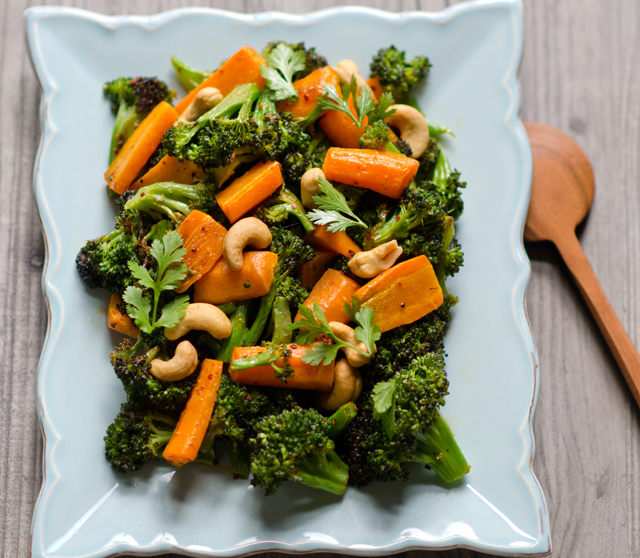
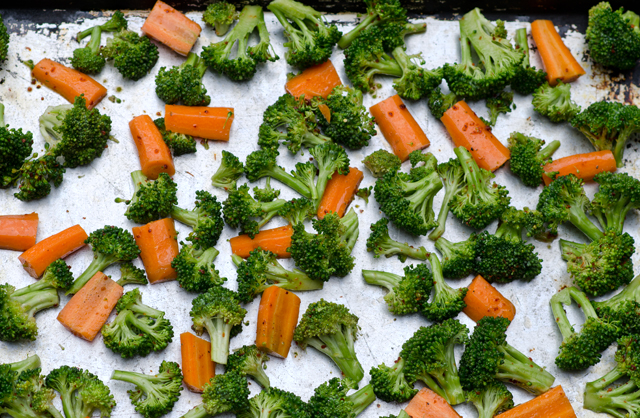
DSC_3357aMy original idea for this post was to make a salad, but sometimes the simplest things are the best. Freshly harvested broccoli and carrots are tossed with a good quality extra virgin olive oil, salt, freshly ground black pepper and my favorite ingredient to add to the roasting mix, aleppo pepper. Aleppo pepper, as I have mentioned before in a previous post is one of my favorite new ingredients of the past several years. It is dark red in color, flaky and somewhat oily in texture. It’s flavor profile is rich, sweet and fruity with hints of cumin.  Aleppo’s heat profile is moderate, only just a little hotter than paprika.

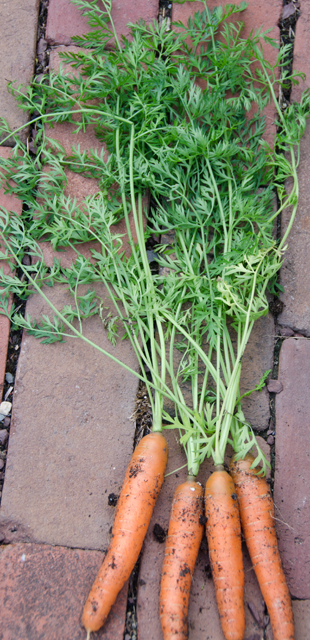
Begin by cutting your vegetables in relatively uniform pieces; in this case; the broccoli in individual florets and carrots in one inch lengths so they will roast in the same time as the broccoli.  Remember that vegetables shrink when roasting so always cook more than what you might if you were steaming or sautéing.

Although some recipes have you do it right in the pan, vegetables are more evenly oiled and seasoned in a bowl . Use just enough oil to give an even coating, about two tablespoons for this quantity should be enough. Season generously with salt, freshly ground pepper and whatever herb you might choose. In addition to Aleppo pepper, I have used paprika, chipotle pepper, cumin, thyme, it all depends on what compliments your vegetables best.

Roasting should always be done on a large shallow sided sheet pan. The ones I use are called “half size” and have a 18″x13″ dimension. They are relatively inexpensive and available in most big box stores. I consider them indispensible and have about a dozen from my catering days. Using a pan or baking dish with high sides will cause them to steam rather that roast because of the high water content of vegetables.

Give the vegetables room for roasting, everything should be in a single layer on the pan with a little room between each piece. I like to roast on a relatively high heat, 425°F to 450°F to insure they will caramelize on the outside and be nice and tender on the inside.  I like to stir or shake the pan every five minutes or so to roast every surface.  Time may vary for desired doneness, that’s why I check them frequently. The larger your pieces are, the longer it will take them to cook.

For a finishing touch to my roasted vegetables I added some cashews and a little fresh cilantro. In this case, simple was the best.

DSC_3324a

DSC_8441a

DSC_3352a
Cut vegetables into uniform pieces and spread out evenly on a sheet pan.

Oven Roasted Broccoli and Carrots

Serves 2-3

Ingredients

  • 1 large head of broccoli, florets chopped off the stalk, about 6-7 cups
  • 3 medium carrots, cut in half and into 1″ lengths
  • 2-3T extra virgin olive oil
  • 2-3t kosher salt
  • 2t freshly ground black pepper
  • 1t Aleppo pepper
  • 1/4c unsalted cashews
  • 1/4c cilantro leaves

Directions

  1. Preheat oven to 425°F.In a large bowl, toss the vegetables together with the olive oil, salt and pepper.
  2. Transfer vegetables to a large sheet pan, spreading them out evenly.
  3. Roast vegetables, shaking the pan every five minutes or so to be certain all surfaces are roasted. My vegetables were very fresh and took about 15 minutes total to cook. Your time may vary.
  4. Transfer vegetables to a serving bowl. Garnish with cashews and cilantro.

June 14, 2015 Crustless Spinach, Mushroom and Canadian Bacon Quiche

DSC_3155aConsider a humble little package of frozen chopped spinach, a convenience and a staple in many kitchens, including mine. You might be quite surprised how many cups of fresh spinach it takes to make that 10 ounce brick of frozen. That was the information I was looking for this week.

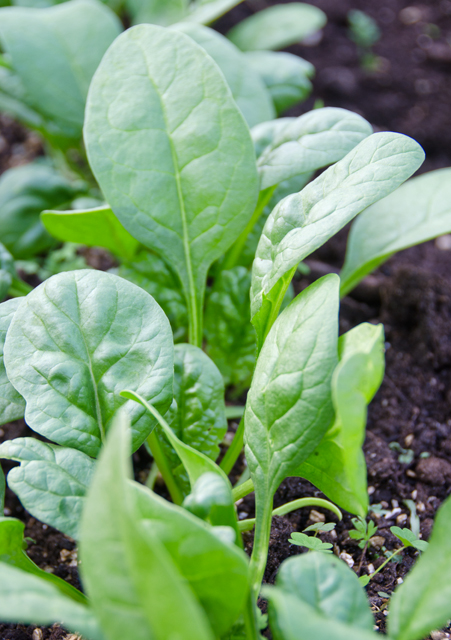
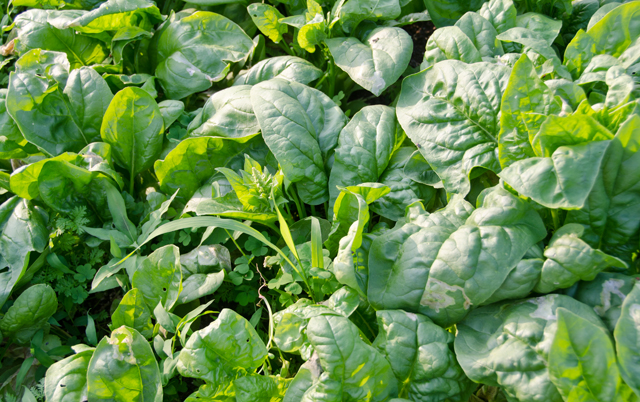
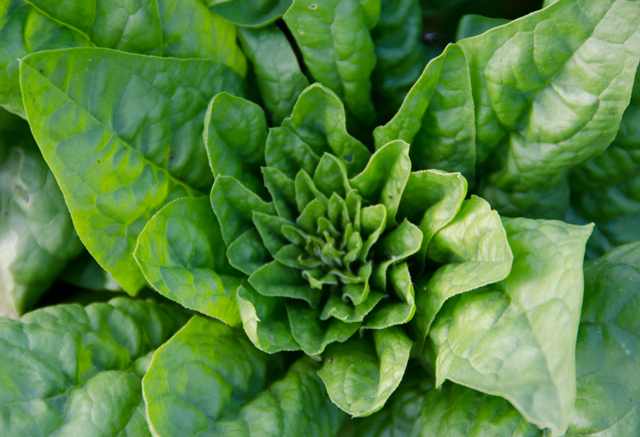
Our spinach plants are going to seed and it was time to do one last serious pick before pulling them out and getting the space ready for another planting. When picking spinach, especially in the extreme hot weather (95°F) it is important to not use a metal bowl or colander, they will put your freshly picked leaves into immediate wilt that will be hard to revive from.  I prefer using a clear plastic “pebble” bowl, sturdy hard plastic bowls I used in my catering business. I snip off the best leaves with scissors, leaving the plant and damaged leaves behind for the mulch pile. Next, I soak the spinach in a clean sink of cold water. I start the process by swishing the leaves around in the sink. I let them sit for a few minutes, the spinach will float to the top, and the dirt and debris will sink to the bottom.  Then I gently lift out the leaves and transfer them to a colander. I will repeat the process again to be sure all the dirt is removed. I refrigerated the spinach in the large bowls with some plastic wrap draped over the top.

Now it was time to find ways to use up this bounty.  Spinach is a powerhouse of nutrition, low in calories, a rich source of iron, vitamins A, C, and K, potassium, calcium and magnesium. End of the season spinach is still very good, but not necessarily something you would want to use in a salad. So I was on the hunt for recipes with cooked spinach. Frittata, quiche, spanakopita, all good choices but many recipes just call for that ubiquitous ten ounce package of frozen spinach. I needed to find the conversions to take that very large bowl to the amount of cooked spinach I needed.

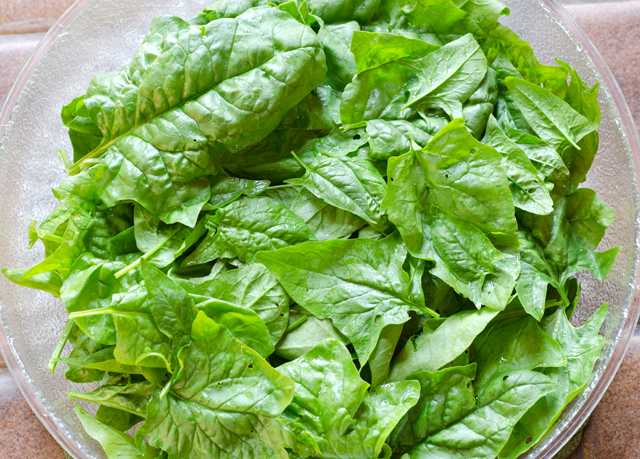
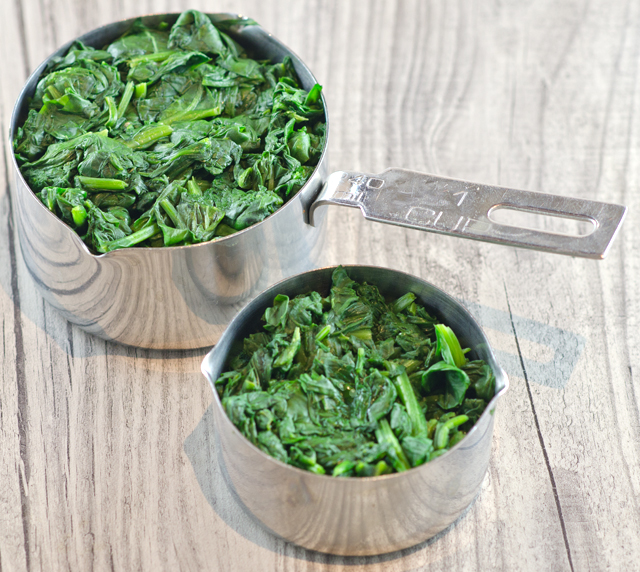
Spinach is 90% water in composition and when cooked, 1 pound of fresh spinach is equivalent to 10 to 12 cups and will cook down to 1 cup. One 10-ounce package of frozen spinach is the equivalent of 1 1/2 pounds of fresh spinach or about 15-18 cups of spinach. In my pictures you will see a before and after of the spinach. To reduce it, I cooked the spinach in a 10″ sauté pan using just the water that clung to the leaves. Then I drained it thoroughly in a fine mesh colander, squeezed it dry and chopped it roughly.

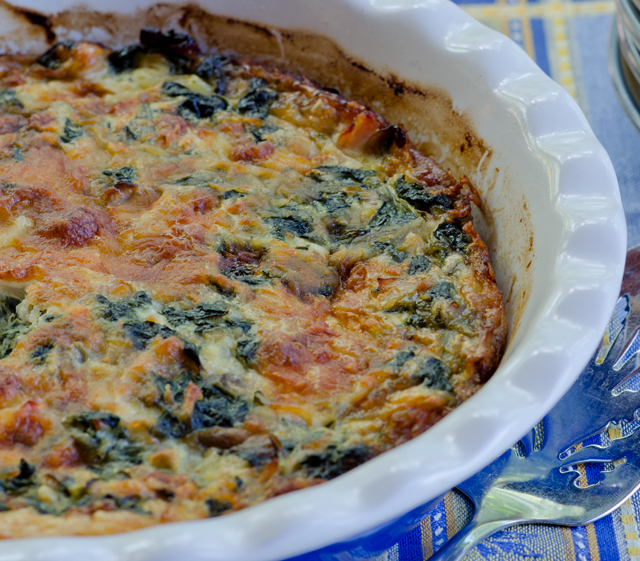
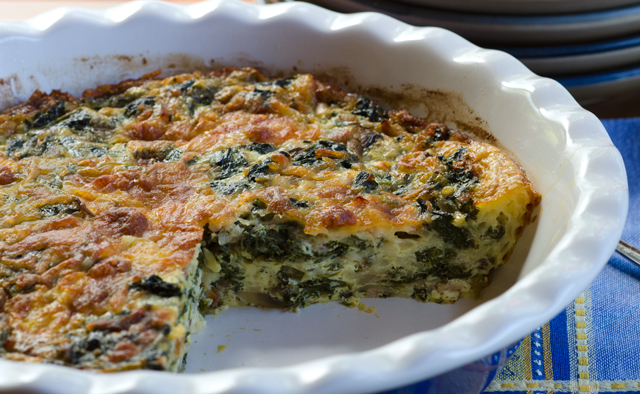
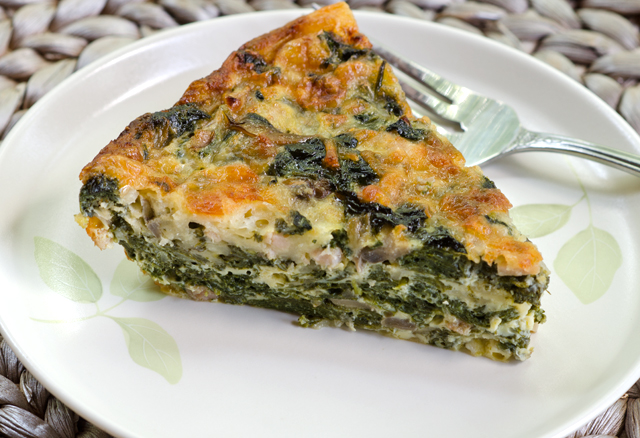
My efforts paid off. With the spinach I picked, I was able to make all three, frittata, quiche and spanakopita. This quiche can be put together in minutes since the most time consuming part is eliminated, making the crust.  I added some sauteed sliced mushrooms and Canadian bacon. In case you didn’t know, American bacon comes from the fatty belly of the pig and Canadian bacon is cut from the loin.  Of course a 10 ounce package of frozen spinach can be substituted in this recipe. It makes a nice breakfast or light lunch and reheats well the next day.

DSC_3115a
Fifteen to eighteen cups of fresh spinach.
Cooks down to this!
Cooks down to this!

DSC_3148a

Crustless Spinach and Canadian Bacon Quiche

Makes 6-8 servings

Ingredients

  • 1c finely chopped onion
  • 1c sliced fresh mushrooms
  • 1T vegetable oil
  • 1 package (10 ounces) frozen chopped spinach or 1½c cooked and chopped fresh spinach
  • 2/3c finely chopped Canadian bacon
  • 5 large eggs
  • 3c shredded swiss cheese (other cheeses will work too like cheddar or Monterey Jack)
  • 1/8t freshly ground pepper

Directions

  1. In a large skillet, sauté onion and mushrooms in oil until tender.
  2. Add spinach and ham, cook and stir until the excess moisture is evaporated.  Cool slightly.
  3. Beat eggs, add cheese and mix well. Stir in spinach mixture and season with pepper; blend well.
  4. Spread evenly into a greased 9-inch pie plate or quiche dish.
  5. Bake at 350°F for 40 to 45 minutes or until a knife inserted near the center comes out clean.

DSC_3145aDSC_3162a


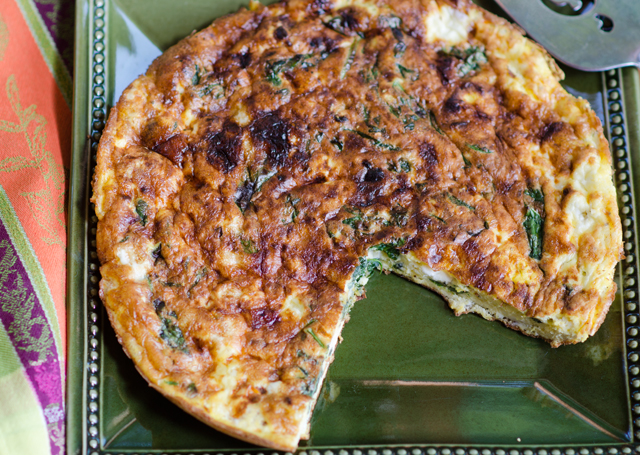
June 2, 2015 Spinach, Sun Dried Tomato and Feta Frittata

DSC_2848aI was looking for a different way to use some of our abundance of spinach and decided a frittata would be a good choice. Frittata is the Italian name for a flat open faced omelet. They are quick to make and can be enjoyed warm or at room temperature, not only just for breakfast, but at lunch and dinner as well.  In the late Marcella Hazan’s The Classic Italian Cookbook, she delineates three distinctions between the omelet and the frittata.

  • An omelet is cooked briefly over high heat, a frittata is cooked slowly over low heat.
  • An omelet is creamy and moist, just short of runny. A frittata is formed and set, although by no means, stiff and dry.
  • An omelet is rolled or folded over into an oval tapered shape. Frittatas are flat and perfectly round.

This recipe’s framework came from a recipe on the Cooks Illustrated website. It called for a dozen eggs and just a few tablespoons of half and half to add some creaminess. The original recipe was for a frittata with broccoli rabe, sun dried tomatoes and fontina cheese. I substituted four cups of lightly packed spinach with the large stems and ribs removed for the rabe. The spinach was just picked and washed so I was able to cook it down quickly with just the water that clung to the leaves, so very little oil was needed in the pan. I substituted my favorite French feta for the fontina, since spinach and feta are such a good combination. The sun dried tomatoes called for in the original recipe were oil packed. The sun dried tomatoes I used were ones I made last summer with Sun Gold tomatoes from the garden. They just needed to be reconstituted in some warm water for about ten minutes to bring them back to life. I was surprised (and pleased) that the skin came off in the process. I chopped them roughly before adding them to the frittata.

A  heavy bottomed oven safe non stick skillet is absolutely necessary to make the frittata. Before you proceed with the recipe be sure the skillet fits comfortably under the broiler without a great deal of maneuvering. The handle on my skillet was a bit high and made getting it in and out of the oven quite challenging. Have thick potholders at the ready so you don’t burn your fingers pulling the pan out of the oven. Once out, leave the potholder over the handle to remind yourself the pan is still hot. Use a spatula to loosen the frittata from the pan and transfer to a platter or cutting board. Of course, there are countless variations of the frittata and as the season moves on my add-ins will change.  Whatever you put in yours, it’s a great quick weeknight supper to serve alongside a simple green salad.

DSC_2601a
Spinach, just a few weeks ago.
DSC_2902a
That same spinach a few days ago.

DSC_2901a

Spinach, Sun Dried Tomato and Feta Frittata

Makes one 12″ frittata

Ingredients

  • 12 large eggs
  • 3 T half and half
  • 1 teaspoon olive oil
  • 4 c loosely packed spinach, large ribs and stems removed, cut into 1 inch pieces
  • 1 clove garlic, finely minced
  • 1/8t red pepper flakes
  • 3/4c lightly crumbled feta cheese
  • 1/4c coarsely chopped sun dried tomatoes

DSC_2850a

Directions

  1. Adjust oven rack to upper middle position, about 5 inches away from the heating element. Heat broiler.
  2. Whisk eggs, half and half, ½t salt and ¼t freshly ground pepper in a medium bowl until well combined, about 30 seconds. Set eggs aside.
  3. Heat oil in a 12-inch non stick skillet over medium heat until shimmering; add spinach and cook until it wilts, about 1 minute. Add garlic and red pepper flakes and cook until fragrant, about 30 seconds. Stir crumbled Feta and sun dried tomatoes into eggs; add egg mixture to skillet and cook, using spatula to stir and scrape bottom of skillet, until large curds form and spatula begins to leave wake but eggs are still very wet, about 2 minutes. Shake skillet to distribute eggs evenly, cook without stirring for 30 seconds to allow the bottom to set.
  4. Slide skillet under broiler and broil until frittata has risen and surface is puffed and spotty brown, 3 to 4 minutes; when cut into with a paring knife the eggs should still be slightly wet. Remove skillet from oven and let stand 5 minutes to finish cooking; using spatula, loosen frittata from skillet and slide onto platter or cutting board. Cut into wedges and serve.


DSC_2855a

February 11, 2015 Kung Pao Brussels Sprouts

DSC_1210a

Magazine features come and go over the years and often reveal the trends of the time. In the first issue of Bon Appetit I purchased back in 1982 (!) readers could find a column featuring recipes created using a relatively new appliance, the food processor, “Bon Vivant”, a “who’s who and what’s new in the world of food, wine and spirits”, columns featuring cooking for two, wine and spirits, travel and “Too Busy to Cook”, time saving reader recipes.

One column that has lasted all these years is “R.S.V.P.”, reader’s requests of restaurant recipes. Back in 1982 you could find a baker’s dozen of recipes, everything from zucchini nut muffins to sole wellington with a recipe for homemade sausage thrown in for good measure.

In 2015, “R.S.V.P.” still graces the opening pages of the magazine in a paired down format. The February issue has just three recipes, one per page with an accompanying illustration. One recipe in particular caught my eye this month, Kung Pao Brussels sprouts. This recipe comes from Kevin Gillespie, Top Chef “cheftestant” season six and fan favorite. Kevin is presently the chef owner of Gunshow in Atlanta and the author of a best selling cookbook, Fire in My Belly.

I liked the idea of using the kung pao technique with a vegetable.  In the elevated role of the vegetable in today’s cuisine, the first real star was kale and recently that title has been handed over to cauliflower, I feel it’s only a matter of time that Brussels sprouts will take over the spotlight. Like it’s counterparts, kale and cauliflower, Brussels sprouts are a member of the brassica family with the same health benefits. They are packed with antioxidants, vitamin C, folic acid and minerals such as potassium, iron and selenium. Their season is from about mid September to March, and as we have learned from other brassicas, those harvested after the first hard frost are the sweetest.

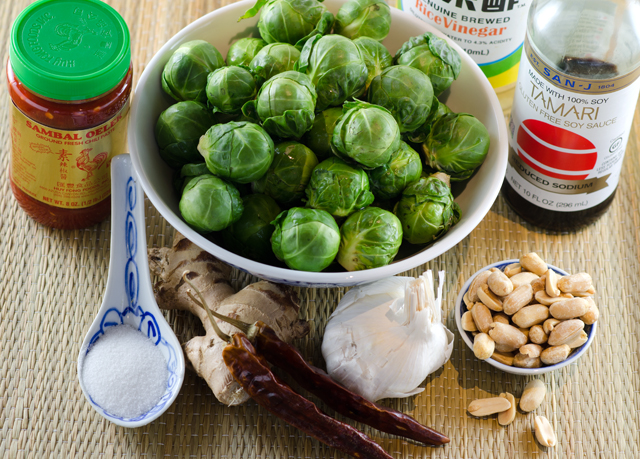
Kung Pao originates from the Szechuan province of China. The classic preparation involves two main ingredients, spicy chiles that contrast with the crunchy, fatty peanuts.  Several sources recount the origins of this dish in similar ways with slight variations. It was either created by or it was the favorite dish of the Gong Bao, a high government official in the nineteenth century. I will leave out the part about the chicken needing to be cut into small pieces because of his dental problems or that the name Kung Pao fell out of favor during the Cultural Revolution. Or maybe you like the alternate explanation, the name Kung Pao loosely translates as “hot firecrackers”. The recipe calls for chile de Arbol  but I thought this would be a perfect opportunity to use dried Kung Pao peppers with similar heat that were harvested from our garden.

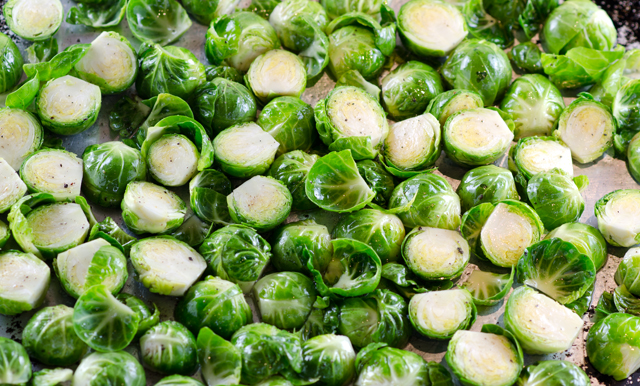
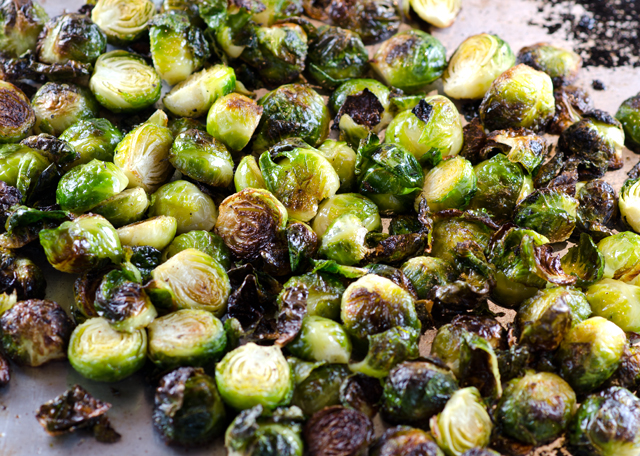
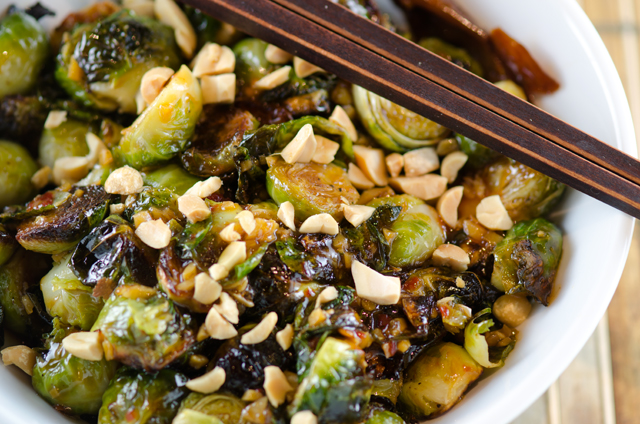
Rinse the sprouts well and trim the bottoms. Slice in half lengthwise and remove any yellowed or damaged leaves. Toss the sprouts with oil, kosher salt and a generous grind of pepper. At the halfway point I take them out, toss them around a bit and flip the baking sheet in the opposite direction. I took my sprouts out about five minutes sooner than the original recipe called for because I was baking in convection mode.  Adjust the heat of the dish to your own comfort level. The dish is supposed to be hot but remember you can always add a little more sambal oelek or another chili pepper, but you can’t take them away.

Assemble the sauce ingredients while the sprouts are baking. Cook the garlic and ginger until deliciously fragrant. Add sambal oelek, chilis and remaining ingredients, thicken with cornstarch and simmer.  I found that using half the amount of sugar, 1 1/2 tablespoons, gave the right amount of hot to sweet balance in the dish.

Would I make this again? Definitely and Joe agrees, this sauce could be used with other vegetables, eggplant, green beans or in a stir fry using several vegetables. And that September 1982 issue of Bon Appetit? There’s a recipe for Red Snapper Szechuan, with surprisingly similar ingredients to the Brussels sprouts  that looks pretty good to me.

DSC_1187aDSC_1190a

DSC_1191a

Kung Pao Brussels Sprouts

Ingredients

Serves 6

  • 2 pounds Brussels sprouts, halved
  • 5 tablespoons vegetable oil, divided
  •  Kosher salt and freshly ground black pepper
  •  1 tablespoon cornstarch
  • 3 garlic cloves, finely chopped
  •  2 tablespoons finely chopped peeled ginger
  •  2 tablespoons hot chili paste (sambal oelek)
  •  6 dried chiles de árbol, lightly crushed (I used Kung Pao chilies)
  •  ½ cup soy sauce
  •  3 tablespoons sugar
  •  2 teaspoons unseasoned rice vinegar
  •  ⅓ cup unsalted, roasted peanuts

Directions

  1. Preheat oven to 425°F. Toss brussels sprouts and 4 Tbsp. oil on a rimmed baking sheet; season with salt and pepper. Roast, tossing once, until softened (but not soft) and browned, 20–25 minutes. Set aside.
  2.  Meanwhile, mix cornstarch and 1 Tbsp. water in a small bowl until smooth.
  3. Heat remaining 1 Tbsp. oil in a medium saucepan over medium-high. Add garlic and ginger and cook, stirring often, until garlic is golden brown, about 2 minutes.
  4. Add chili paste and cook, stirring, until darkened, about 2 minutes. Add chiles, soy sauce, sugar, vinegar, and ½ cup water and bring to a boil; stir in cornstarch slurry. Simmer, stirring, until sauce coats spoon, about 2 minutes. Let cool slightly.
  5. Toss brussels sprouts with sauce and serve topped with peanuts.
DSC_1213a
Dried Kung Pao peppers from our garden.

DSC_1208a


September 25, 2014 Eggplant Involtini

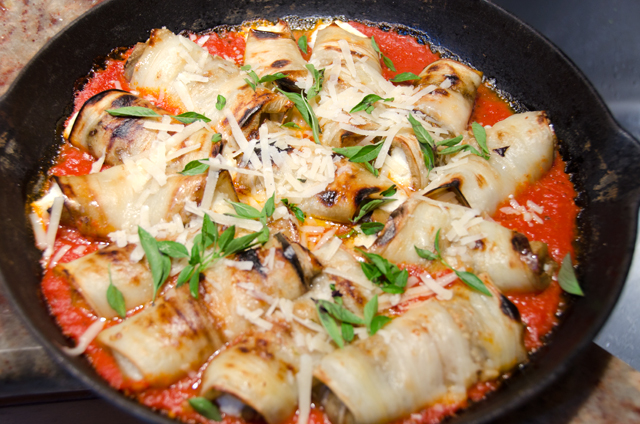
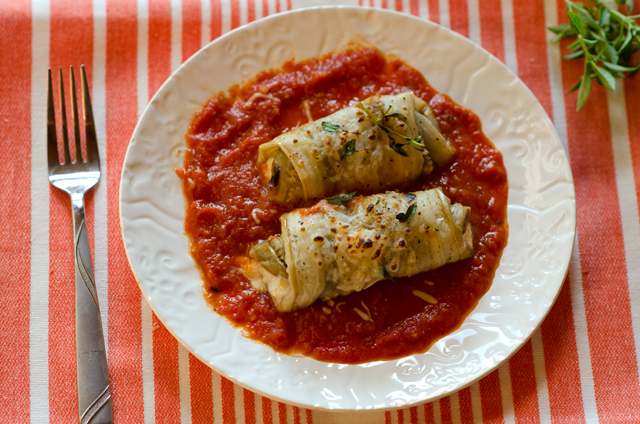
DSC_9067aWith lots of caponata, grilled eggplant, ratatouille, and a double batch of eggplant parmesan under my belt, I was looking for another way to enjoy the bounty of our eggplants this season. It came in the July/August issue of Cooks Illustrated magazine, eggplant involtini.

After all these years (30+) I still look forward pouring over the latest issues of the cooking magazines I subscribe to. Since the magazines are a little in advance of what is ready to harvest from the garden, I put a yellow sticky note on the seasonal recipes I would like to try. Eggplant involtini was in the July/August issue that arrived in June when our eggplants didn’t even have their first flowers, so I have been waiting several months to try this recipe.

Involtini are neat little bundles of stuffed meat, fish or vegetables. Fillings can be as varied as your imagination. Eggplant works especially well as a wrapper for involtini. Use your largest, broadest eggplants to make the planks. Lop off the stem and hold the eggplant upright. With a very sharp knife, make approximately 1/2″ thick planks. For the first and last pieces you will need to trim off the rounded outer edge. I found that a vegetable peeler handled the problem nicely.

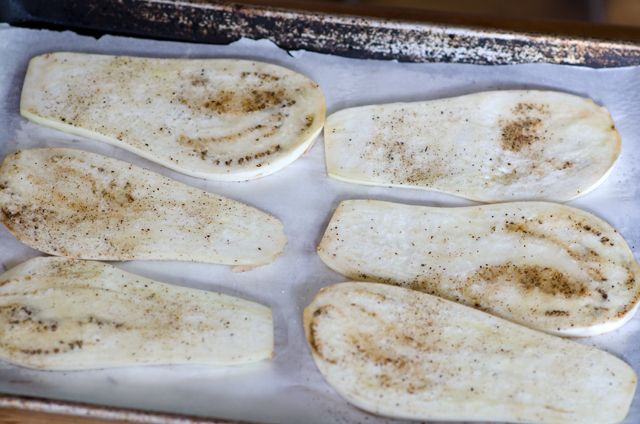
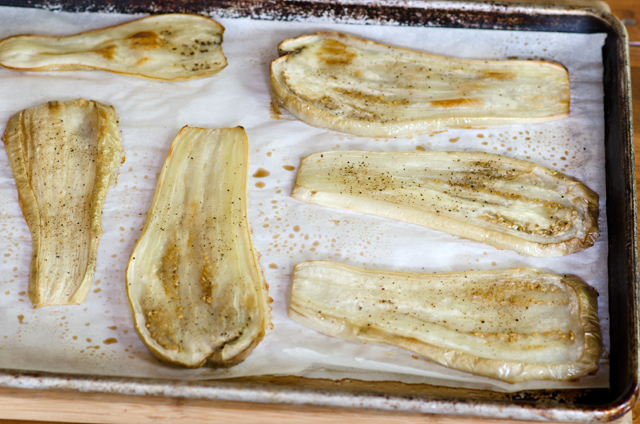
Instead of frying, which is called for in many involtini recipes, the slices are brushed lightly on both sides with olive oil, and seasoned with salt and pepper and baked. This makes the slices pliable enough to roll without falling apart.

Once the slices have cooled a bit, fill with the fatter edge closest to you and roll up. Ricotta, though it doesn’t have much flavor of it’s own is a good binder for the more flavorful ingredients, pecorino romano and basil. The addition of fresh lemon juice brightens the flavors. A generous tablespoon of filling is enough for each slice. The original recipe called for some bread crumbs in the filling to bind it a little, I didn’t include this step and thought my filling held up nicely.

While you are cooking the eggplant there’s time to make a very basic sauce. Canned whole tomatoes, garlic, oregano, kosher salt and pepper are all you need. I always use my whole roasted tomatoes from the garden that I freeze for months without tomatoes. We had a bumper crop this year so I will be making a lot of chili, lasagna, stuffed peppers over the winter months. As for the canned varieties, in a taste test done by Cooks Illustrated, Muir Glen Organic Whole Tomatoes was the winner. Muir Glen is about a dollar more per can than the more familiar runner up, Hunts.

The involtini rolls, are added to the thickened sauce and brought to a simmer. Once the sauce is warmed, additional cheese is sprinkled on top. The rolls are browned and the cheese is melted in the broiler. Finish off with a sprinkle of basil, mini basil leaves worked well here.

Not the quickest or easiest preparation, but both the rolls and the sauce can be made in advance and assembled right before serving. An impressive dish good enough for company.

Eggplant Involtini

Serves 4 to 6

Ingredients

  • 2 large eggplants, shorter wider eggplants are best (1 1/2 pounds each), if skin is thick, peel, I did not peel mine
  • 6T olive oil
  • Kosher salt and pepper
  • 2 cloves garlic, finely minced
  • 1/4t dried oregano
  • Pinch red pepper flakes
  • 1 28oz canned whole peeled tomatoes drained with juice reserved, chopped coarse-I used my garden roasted tomatoes
  • 1c  whole-milk or part skim ricotta cheese
  • 3/4c hard Italian grating cheese like Gran Padano or Pecorino Romano
  • 1/4c plus 1 tablespoon chopped fresh basil or torn mini basil
  • 1T fresh lemon juice

Directions

  1. Slice each eggplant lengthwise into 1/2-inch-thick planks (you should have 12 planks). Trim rounded surface from each end piece so it lies flat. I found that using a vegetable peeler made this easier. Adjust 1 oven rack to lower-middle position and second rack 8 inches from broiler element. Heat oven to 375°F.
  2. Line 2 rimmed baking sheets with parchment paper and spray generously with vegetable oil spray.
  3. Arrange eggplant slices in single layer on prepared sheets. Lightly brush 1 side of eggplant slices with oil and sprinkle with kosher salt and pepper. Turn slices over and repeat brushing and seasoning.
  4. Bake until tender and lightly browned, 30 to 35 minutes, switching and rotating sheets halfway through baking. This process took about 10 minutes less in my convection oven.  Let cool for 5 minutes. Using thin spatula, flip each slice over. Heat broiler.
  5. While the eggplant is cooking, heat remaining 1 tablespoon oil in 12-inch broiler-safe skillet, over medium-low heat until just shimmering. Add garlic, oregano, pepper flakes, and 1/2 teaspoon salt and cook, stirring occasionally, until fragrant, about 30 seconds.
  6. Stir in tomatoes and their juice. Increase heat to high and bring to simmer. Reduce heat to medium-low and simmer until thickened, about 15 minutes. Cover and set aside.
  7. Stir together ricotta, 1/2 cup cheese, 1/4 cup basil, lemon juice, and 1/2 teaspoon salt in medium bowl.
  8. With widest ends of eggplant slices facing you, evenly distribute ricotta mixture on bottom third of each slice. Gently roll up each eggplant slice and place seam side down in tomato sauce.
  9. Bring sauce to simmer over medium heat. Simmer for 5 minutes. Transfer skillet to oven and broil until eggplant is well browned and cheese is heated through, 5 to 10 minutes. Sprinkle with remaining 1/4 cup Pecorino and let stand for 5 minutes. Sprinkle with remaining 1 tablespoon basil and serve.
DSC_8719a
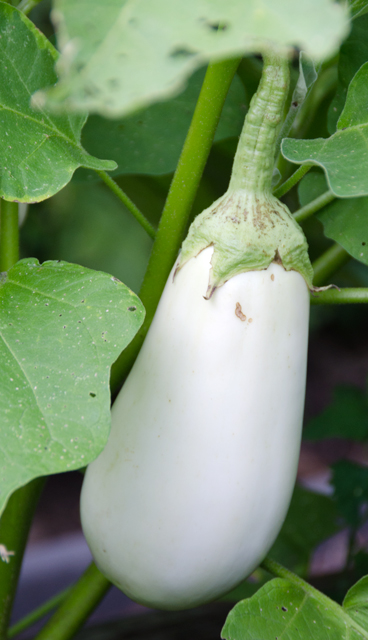
The variety I used for this dish was Clara, a pure white Italian style eggplant.
DSC_9051a
Eggplant slices are brushed with olive oil and seasoned lightly with salt and pepper.
DSC_9054a
After baking the slices are soft enough to roll but don’t fall apart.
DSC_9055a
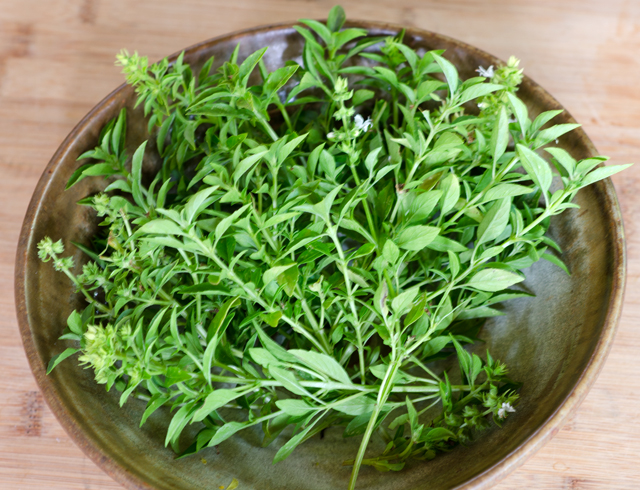
I used roughly torn mini basil in my filling.
DSC_9059a
The very simple filling made of ricotta cheese, Pecorino Romano, fresh lemon juice and mini basil.
DSC_9060a
The eggplant slices are easy to roll up. Place them seam side down in the warmed sauce.

DSC_8993aDSC_9079a

Sept 13, 2014 Tomato, Cucumber and Watermelon Salad

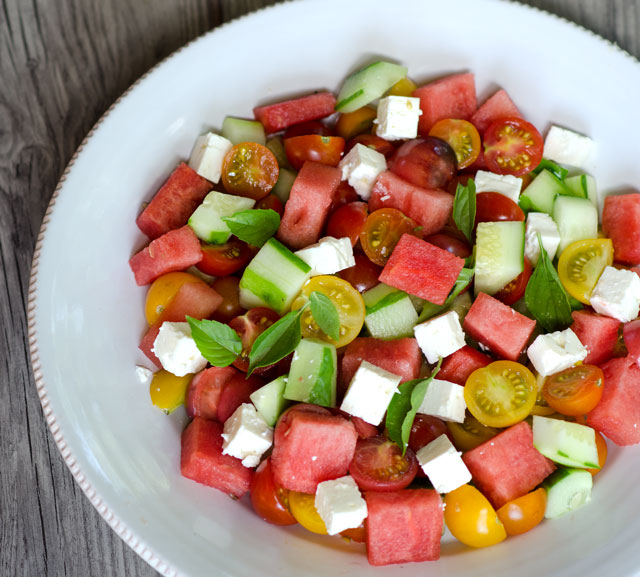
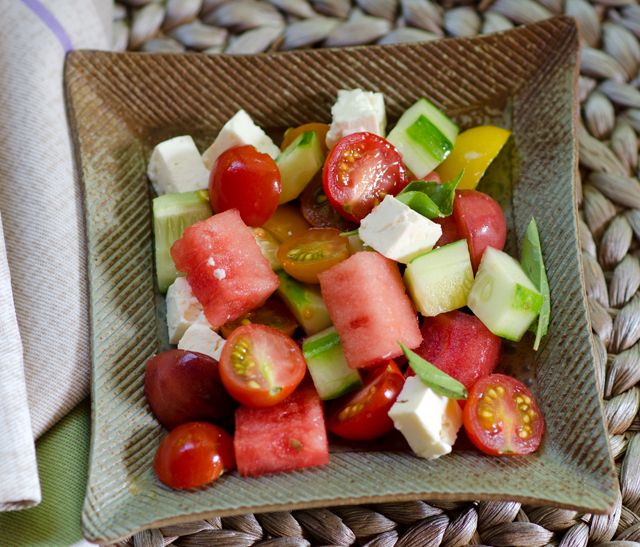
DSC_8707aCool, crisp, quick and delicious, what higher praise could I bestow on a summertime salad? This best-of-summer salad brings together sweet cherry tomatoes, crunchy cucumbers, succulent watermelon and creamy salty feta.

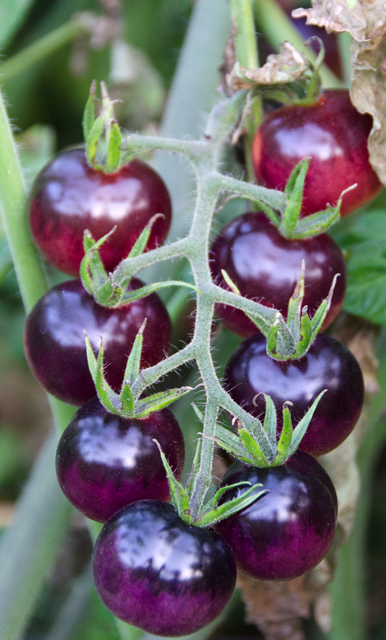
Joe has grown more tomatoes than ever and the varieties are amazing. Indigo Blue Berries, Black Cherry, Pink Bumble Bee, Sungold, to name a few, as beautiful to behold as they are sweet and juicy to devour.

Indigo Blue Berries are a new variety this year. Like the blueberry, Indigo Blue Berry tomatoes contain high levels of anthocyanin, a naturally occuring antioxidant. Pink Bumble Bee tomatoes are a round pink cherry tomato striped with yellow and orange.  The Black Cherry tomato is a deep red with a blackish hue. Sungolds are an apricot orange in color with a sweet tropical flavor.
It’s best to cut the tomatoes in half for easier eating. My serrated edge Cutco knife always gives me a neat cut through the tomato skin. I peel most of the skin from the cucumber and leave a strip of skin on for color. Scoop out the seeds if they are too large.

Another member of the cucurbit family, watermelon, brings a refreshing sweetness to the salad. The watermelon you will most likely find anywhere these days will be seedless.  Over the past several years it has become increasingly difficult to find seeded watermelons. Only 10% of watermelons grown on farms in 2011 were of the seeded variety, in 2003, almost 37% were.

Seedless watermelons are not genetically modified but are “the watermelon version of the mule.” They are a sterile hybrid achieved by crossing the pollen of the normal diploid (2 sets of chromosomes) watermelon with a female flower that is a tetraploid (4 sets of chromosomes). The genetic change occurs from the use of colchicine, a chemical derived from the fall blooming crocus that impacts chromosomes and has been used for years to treat and cure gout. The resulting seeds from these two plants are triploids (3 sets of chromosomes) and will produce sterile seedless watermelons. The white seeds, also known as “pips”  you may find in your seedless watermelons are hollow seed coats that didn’t mature.
Seedless or seeded, which type tastes better? Is it just nostalgia, do we fear the end of the days of watermelon seed spitting contests? If you still want seeds in your watermelon you may find those varieties at your farmers market or you may just need to grow your own.

As someone who always likes to sprinkle a little salt on her watermelon, feta just seems like a natural addition to this flavor combination. Feta brings both a creamy texture and a contrasting saltiness that brings out the flavors of the other elements of this salad. The simplest of dressings and a scattering of fresh basil and you have a great summer salad, colorful and easy to put together, a refreshing addition to any barbecue or cookout.

DSC_8735a
Pink Bumble Bee is a new addition to our tomato selection this year.
DSC_8728a
The Indigo Blue Berry is definitely blue, when ripe it develops a reddish hue.

Tomato Cucumber and Watermelon Salad

Serves four

Ingredients

  • 2c assorted cherry tomatoes, halved
  • 1 1/2c medium diced seedless watermelon
  • 1 large cucumber, peeled, quartered, seeded if necessary, cut into 3/4″ pieces
  • 3/4c feta cheese, cut into half inch cubes
  • 1/4c fresh mini basil leaves or large leaves torn into small pieces
  • 1T extra virgin olive oil
  • 1T lemon juice
  • Kosher salt and freshly ground pepper

Directions

  1. Put the cherry tomatoes, watermelon, cucumber, feta and basil in a large bowl.
  2. In a small bowl whisk together the olive oil, lemon juice, 1/4t salt and a 1/4t fresh ground pepper. Drizzle the dressing over the salad and toss gently to coat.

DSC_8704aDSC_8710a

September 10, 2014 Grilled Asian Eggplant Salad

DSC_8668a

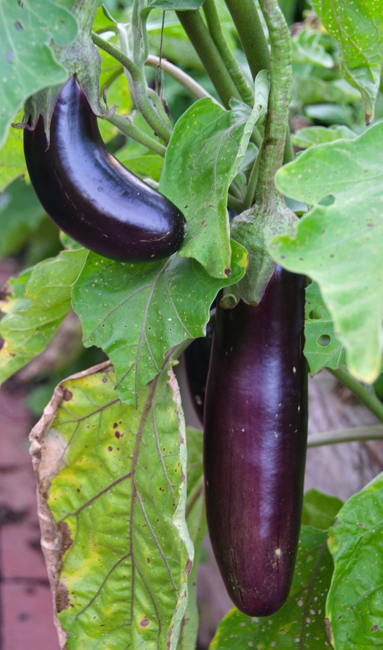
It’s a great time of year to try out some new eggplant recipes. Whether from the farmers market, your local CSA or your own garden, freshly harvested eggplants are at their best. Our garden has produced an amazing array of eggplants this summer. Bright fuchsia Dancer, slender dark violet Orient Express, pure white Clara, beautifully variegated Nubia, all the varieties we have harvested this year have thin skin and minimal seeds.
What we most often consider to be Asian eggplants are the long slim tapered varieties.   Actually Asian eggplants, whether Chinese, Japanese, Thai or Indian can be round or pear shaped, pure white or lime green and as small as an egg as well as the dark purple we are most familiar with.
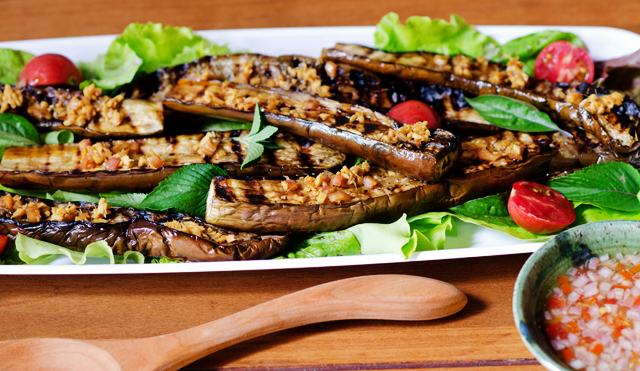
In this Thai-style recipe for a yam or salad, eggplant slices are brushed with oil and grilled. If the weather is inclement or you just don’t have the time to fire up the grill they can be cooked indoors on a ridged grill pan.

Save the seasoning until after the grilling the eggplant. It’s then the creamy flesh will soak up the flavor of the ginger and soy, transforming the once raw bitter slices to something delicious.
Though not necessarily typical of this type of salad, I served the grilled eggplant slices on salad greens. Our lettuces have made their late summer return to the garden and I tossed some assorted greens with a few sweet cherry tomatoes, basil and mint. I used the small spicy leaves of Thai basil and Vietnamese mint that doesn’t overpower the salad. An Asian style vinaigrette combining the traditional combination of hot, sour salty and sweet dresses the greens and enhances the flavor of the grilled eggplant.

DSC_8855a
Beautiful dark purple Orient Express eggplant.

Grilled Asian Eggplant Salad

Serves four

Ingredients

  • 1/4 c freshly squeezed lime juice
  • 1/4 c peanut or canola oil
  • 3 T finely minced shallot
  • 1 1/2 T fish sauce
  • 2 t granulated sugar
  • 1 to 2 Thai bird chiles, minced, or 1-1/2 to 2 serrano chiles, seeded, minced
  • Kosher salt and freshly ground black pepper
  • 2 T minced fresh ginger
  • 1-1/2 T soy sauce
  • 1 1/2 lb. long, slender Asian eggplants, trimmed and halved lengthwise
  • 4-5 c baby lettuce leaves
  • 10 to 12 oz. cherry or grape tomatoes, halved (about 2 cups)
  • 1 c  packed fresh basil leaves, Thai, if you have it
  • 1/4 c packed fresh mint leaves, I used Vietnamese mint (very mild)

Directions

  1. Prepare a medium-high gas or charcoal grill fire.  Alternately heat a grill pan over medium high heat.
  2. In a small bowl, whisk 3 Tbs. of the oil with the lime juice, 2 Tbs. of the shallot, the fish sauce, 1 tsp. of the sugar, and the chiles. Season to taste with salt and pepper.
  3. In another small bowl, combine 2 tsp. water with the ginger, soy sauce, the remaining 1 Tbs. shallot, and 1 tsp. sugar.
  4. Arrange the eggplant halves on a rimmed baking sheet, brush both sides with the remaining 1 Tbs. oil, and sprinkle with salt and pepper. Grill the eggplant, covered, until tender, 3 to 5 minutes per side. Alternately grill the eggplant in a grill pan, 3-5 minutes on each side until tender.
  5. Combine the lettuces, tomatoes, basil, and mint in a large bowl. Re whisk the lime dressing and toss just enough into the salad to lightly coat the greens. Season the salad to taste with salt and pepper. Transfer the salad to a platter and arrange the eggplant over the salad. Spoon the ginger mixture over the eggplant, and serve immediately.

DSC_8672a