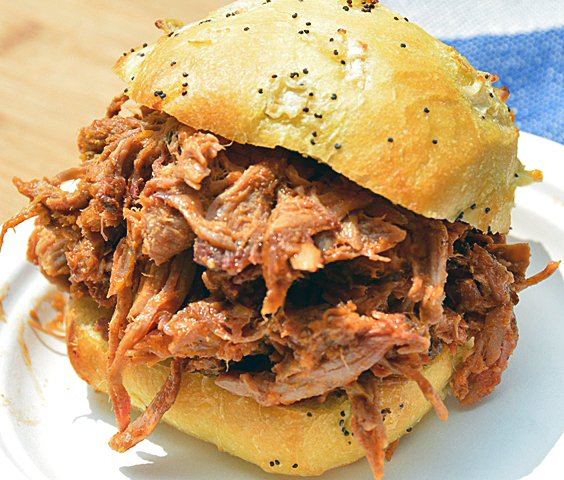
Juicy, succulent pulled pork has become one of our recent barbecue favorites. Boston Butt, a well marbled cut of pork, is smoke-cooked low and slow. Slow cooking allows the flavorful fat and connective tissue to break down and produce meat that does not dry out. The pork becomes tender enough to pull apart, hence the name. The Carolinas are most closely associated with pulled pork. The western mountain Piedmont region of North Carolina roasts pork shoulders. Eastern coastal North Carolina prefer roasting the whole hog. Both Western and Eastern North Carolina sauces are vinegar based, the Western part of the state adds tomatoes. South Carolina’s sauce is mustard based.
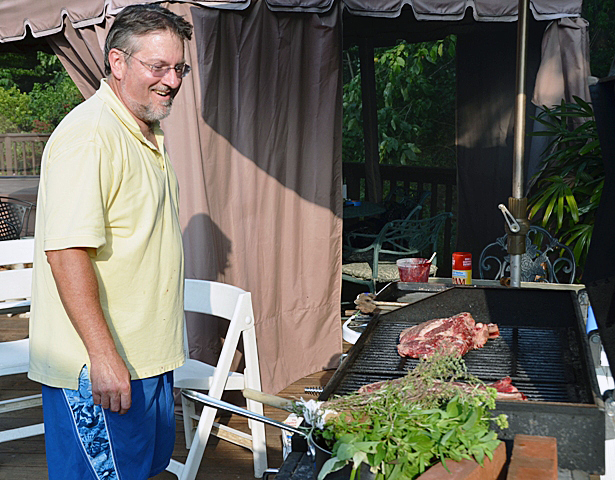
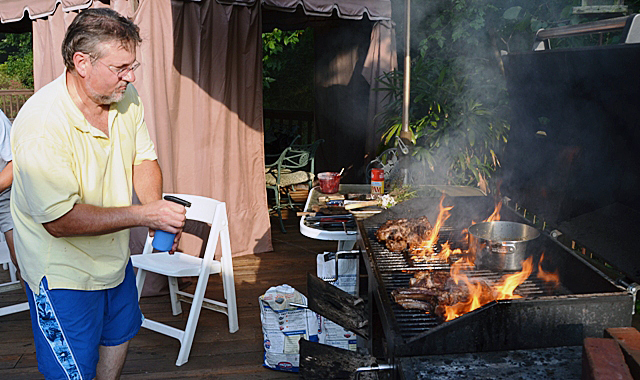
This preparation was, as with all our grill meals, a joint effort. I bought the roast, made the rub and the barbecue sauce. Joe, as always, was my grill man. Read the directions well ahead so you can allow yourself enough time before you plan to serve dinner. The pork requires a great deal of unattended time when you can prepare the rest of the meal. Serve pulled pork on soft rolls. Traditional accompaniments are cole slaw and pickle chips. Our accompaniments included a sweet potato salad, zucchini with pesto, corn on the cob and chard gratin. Next time I think I might try all three styles of barbecue sauce for a comparison.
Barbecued Pulled Pork on a Charcoal Grill
(source: Cooks Illustrated July 1997)
Serves eight or more
Spicy Chili Rub
- 1 T ground black pepper
- 1-2 t cayenne pepper
- 2 T chili pepper
- 2 T ground cumin
- 2 T dark brown sugar
- 1 T dried oregano
- 4 T paprika
- 2 T table salt
- 1 T granulated sugar
- 1 T ground white pepper
Pork
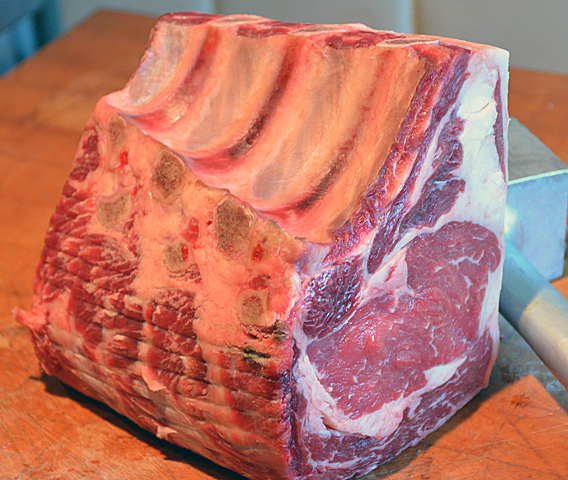
- 1 bone-in pork roast, 6-8 lbs, we prefer the Boston Butt (See my March 21st, 2012 post)
- 2 c barbecue sauce (recipe at end)
Other equipment needed; disposable aluminum roasting pan (half-chafer size), heavy duty aluminum foil and a large brown paper grocery bag.
Directions
- Mix all spicy chili rub ingredients in a small bowl, then set aside.
- Massage dry rub into meat. Wrap tightly in plastic wrap, refrigerate for three hours and up to three days.
- Remove roast from refrigerator an hour before cooking. Unwrap and allow it to come to room temperature. Soak 4 (3 inch) wood chunks in cold water to cover for an hour and drain. Meanwhile, light a large chimney starter filled less than halfway with charcoal briquettes (2 1/2 qts, approximately 40 briquettes), and burn until all the charcoal is covered with a layer of fine gray ash.
- Empty the coals into the grill; build a modified two-level fire by spreading the coals onto one side of the grill, piling them up in a mound 2 to 3 briquettes high, leaving the other half with no coals. Open the bottom vents completely. Place the soaked wood chunks on the coals. Position the cooking grate over the coals, cover the grill, and heat until hot, about 5 minutes (you can hold your hand 5 inches above coals for 2 seconds). Use a grill brush to scrape the cooking grate clean.
- Set unwrapped roast in a disposable aluminium pan and place it on the grate opposite the fire. Open grill lid vents three-quarters of the way and cover, turning lid so that vents are opposite chunks to draw smoke through the grill. Cook, adding about 8 briquettes every hour or so to maintain an average temperature of 275F, for three hours.
- Adjust oven rack to middle position and preheat oven to 325 degrees Fahrenheit. Place roast in pan and wrap with heavy-duty foil to cover completely. Place pan in oven and cook until meat is fork-tender, about 2 hours.
- Slide the foil-wrapped pan with the roast into a brown paper bag. Crimp top shut; rest roast 1 hour. Transfer roast to cutting board and unwrap. Drain any accumulated juices into a saucepan. Reduce the juices on medium heat until thickened. Add reduced juices to barbecue sauce. When cool enough to handle, “pull” pork by separating roast into muscle sections, removing fat and tearing meat into shreds with finger and/or forks. Place shredded meat in large bowl; toss with 1 cup barbecue sauce, adding more to taste. Serve with remaining sauce passed separately.
Western Carolina Style Barbecue Sauce
Makes 2 cups
Ingredients
- 1 T vegetable oil
- 1/2 medium onion, minced (I used a Vidalia)
- 2 medium cloves garlic, minced
- 1/2 c cider vinegar
- 1/2 c Worcestershire sauce
- 1 T dry mustard
- 1 T dark brown sugar
- 1 T paprika
- 1 t table salt
- 1 t cayenne pepper
- 1 c ketchup
Directions
- Heat oil in a medium saucepan over medium heat. Add onion and garlic; saute until softened, 4-5 minutes. Stir in all the remaining ingredients except ketchup; bring to a boil. Reduce heat to low, then add ketchup. Cook, stirring occasionally, until thickened, about 15 minutes.
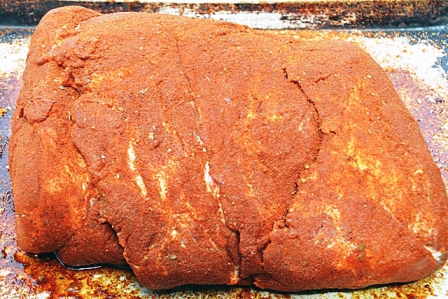
The Boston butt rubbed and ready for the grill.
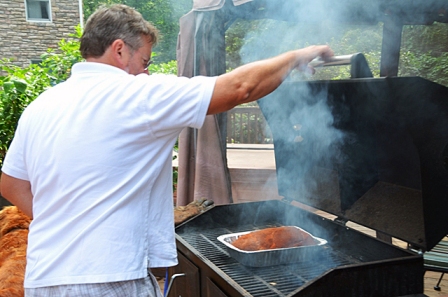
We used cherry wood for our smoking chunks.
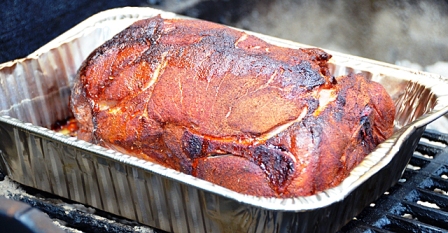
After the first hour of cooking.

The meat is slow cooked and smoked by indirect heat.
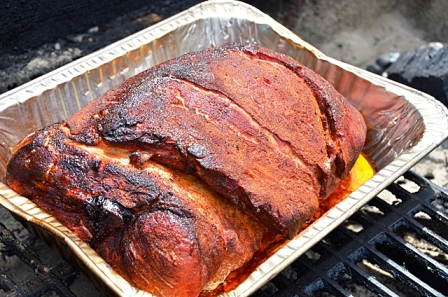
After hour three, ready for the oven.

Pulling the pork. Just add the sauce of your choice.